
A belt weigher weighs everything on the belt, water included. After rain, off a wet stockpile or after dust suppression sprays, a good part of the tonnes going past can be water. If you’re paid, charged or running the plant on dry tonnes, you need to know how much of the load is moisture.
This guide covers why moisture matters, how wet tonnes turn into dry tonnes, and how moisture is measured on a conveyor alongside a belt weigher. For the weighing side, see how a belt weigher works. For the moisture analyser we supply, see hydroSCAN, Australian designed and made by Ultra-Dynamics.
Why does moisture on the belt matter?
- Contracts and accounting: sales, royalties and stockpile figures are often agreed on dry tonnes. Paying or being paid for water costs money.
- Process control: dryers, kilns and blending run better when you know what’s coming before it gets there.
- Handling: wet, sticky material blocks chutes, builds up on belts and causes carryback.
- Dust suppression: spray water adds moisture of its own. Knowing the moisture lets you add only what’s needed.
- Product limits: some products have a moisture limit for shipping or for the next process.
What’s the difference between wet tonnes and dry tonnes?
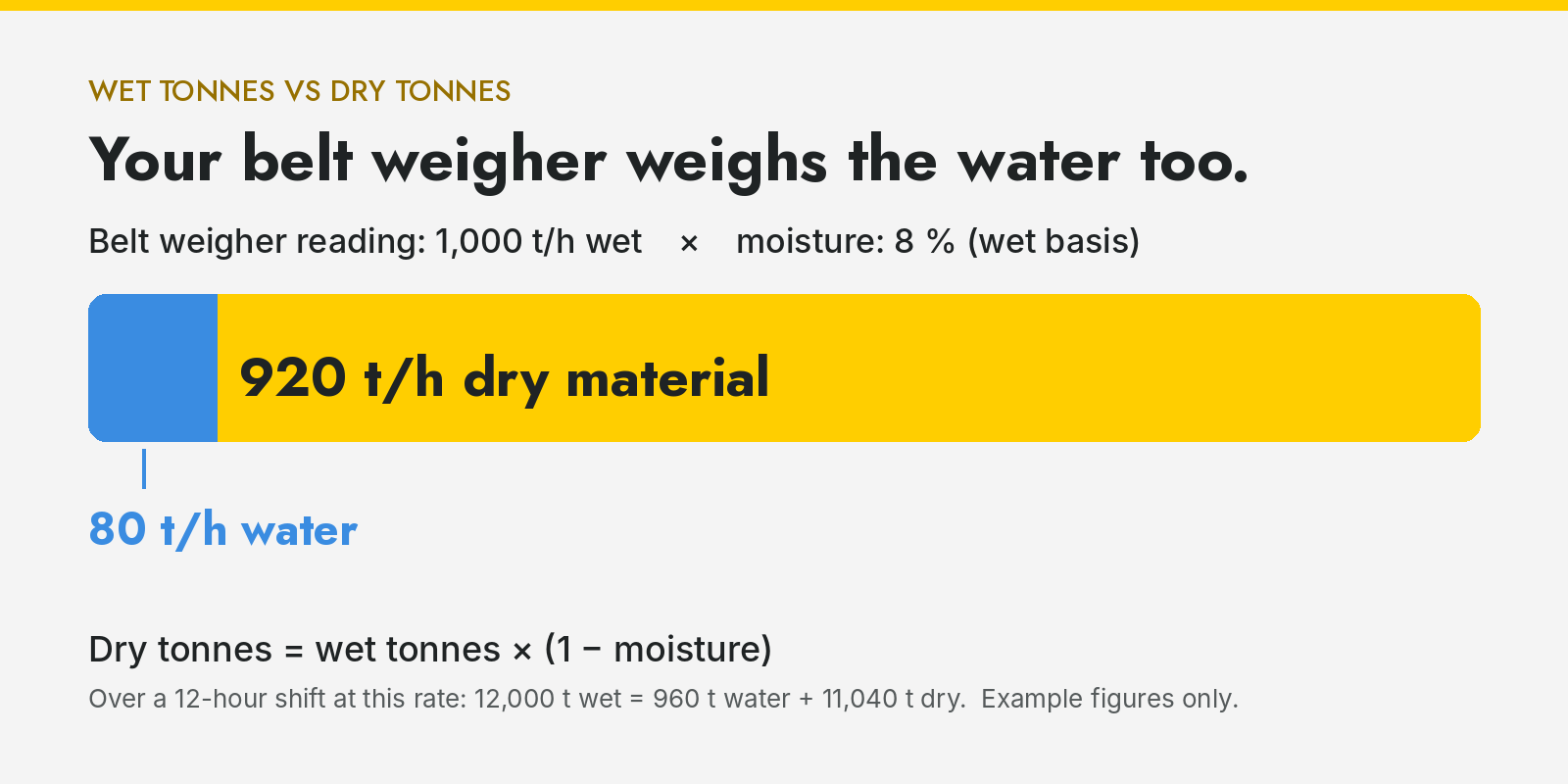
Your belt weigher measures wet tonnes: the material plus whatever water is in it. Dry tonnes is what’s left once the water is taken out. With moisture on a wet basis (water as a percentage of the total wet weight), the sum is simple:
Dry tonnes = wet tonnes × (1 − moisture)
For example, 1,000 t/h at 8% moisture is 80 t/h of water and 920 t/h of dry material. Over a 12-hour shift, that’s 960 t of water going over the belt.
Wet basis or dry basis?
Labs and contracts don’t always quote moisture the same way. Wet basis compares the water to the total wet weight. Dry basis compares it to the dry weight only, so it reads higher for the same material: 8% on a wet basis is about 8.7% on a dry basis. Check which one your contract and your lab use before you compare numbers.
How is moisture measured?
There are three common ways. Each has its place.
Lab samples
A sample is taken from the belt or stockpile, weighed, dried in an oven and weighed again. It’s the reference every other method is checked against. The catch is time: by the time the result comes back, the material has already gone through the plant, and one sample has to stand for a lot of tonnes.
Near infrared (NIR)
An NIR gauge reads light reflected off the top of the material. It’s quick and doesn’t touch the belt, but it only sees the surface. Material colour, ambient light, steam and the distance to the material can all affect it, and its window has to be kept clean.
Microwave transmission
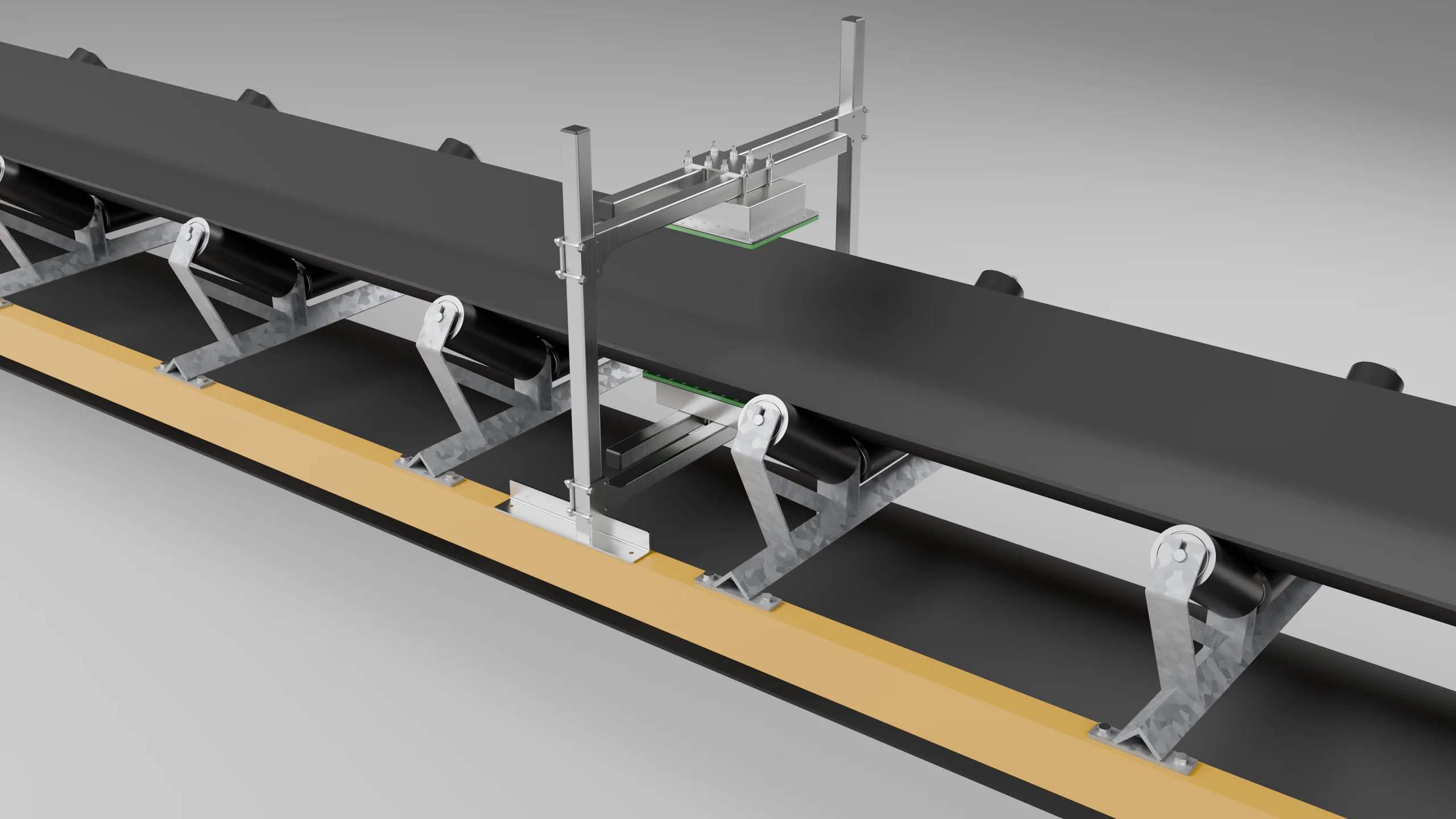
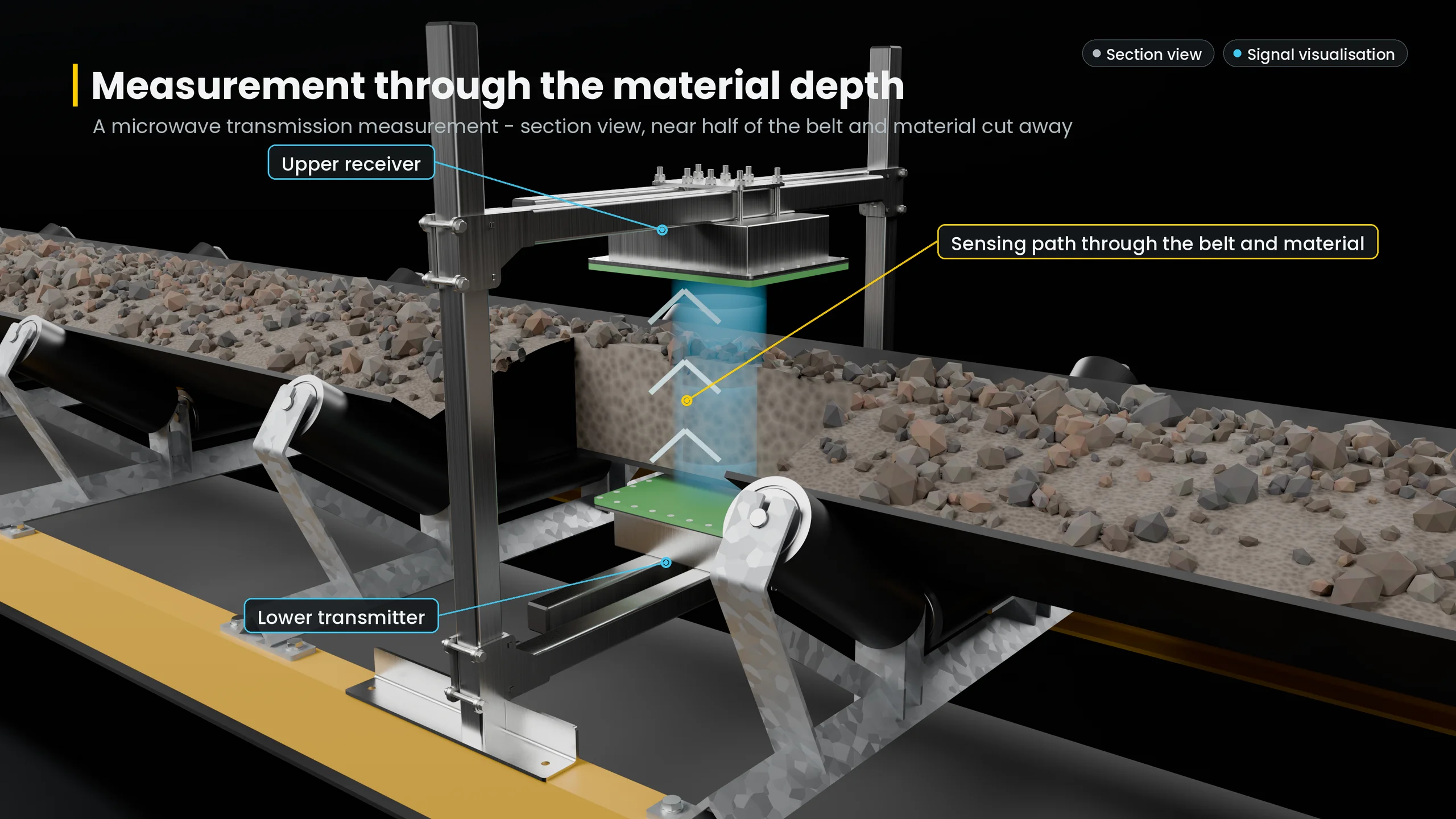
A transmitter under the belt sends a low-power microwave signal up through the belt and the full depth of the load to a receiver above. Water changes the signal, so the reading covers the whole bed, not just the top. Colour, light and steam don’t affect it, and nothing touches the material. This is how a microwave moisture analyser like hydroSCAN works.
Why does a moisture analyser need a belt weigher?
On a conveyor, the load on the belt is always changing. A deeper bed changes the microwave signal as well as the water does, so an online analyser like hydroSCAN takes the tonnage signal from the belt weigher to allow for it.
The two then work as a pair. The belt weigher gives you the tonnes, the analyser gives you the moisture, and your plant control system can work out the dry tonnes from the two. Put them on the same conveyor so they’re measuring the same material.
It also means the belt weigher has to be right. Any error in the tonnes goes straight into the dry tonnes, so keep the weigher calibrated and the belt in good condition. See reading your calibration report.
Where does it go on the conveyor?
- A section of belt that runs straight and steady, with the material settled after the loading point.
- Room on top of the stringers for the frame, and somewhere close by for the electrical enclosure.
- Power for the enclosure, and a way to get the reading to your PLC, DCS or SCADA.
- The belt weigher on the same conveyor.
We look at the conveyor before quoting, so the frame and the head heights suit your belt and load.
How is it calibrated and checked?
An online moisture analyser is calibrated to your material. Samples are taken from the belt, tested in the lab and compared with what the analyser read at the time. Once it’s set up, it runs on its own.
Recheck the calibration if the material, its source or the belt changes. A check every three months keeps it on track, and we can do it at the same visit as your belt weigher service.
Frequently asked questions
Does a belt weigher measure moisture?
No. It weighs everything on the belt, water included. You need a separate moisture measurement to get dry tonnes.
Can I just use a fixed moisture figure?
You can, but moisture changes with the weather, the stockpile and where the material came from. A fixed figure can be well off after rain, and that error goes straight into your dry tonnes.
Does it work on bins and chutes?
Yes. hydroSCAN can be supplied for a bin or chute, with the transmitter and receiver on opposite sides.
Can you add moisture to the belt weigher we already have?
Yes. We work on every brand of belt weigher, so we can set hydroSCAN up alongside the one you’ve got.
Talk to us about moisture on your conveyor
Tell us what the conveyor carries, the belt width and what you want the moisture reading for, and we’ll work out the right setup.