
Belt weighers, also called weightometers or conveyor belt scales, measure bulk material as it moves along a conveyor. The main differences are the number of weigh idlers, how the frame transfers force to the load cells, and how the assembly fits the conveyor. This guide explains the common types used on mine, quarry and process conveyors in Australia and around the world, and what to check before choosing one.
There is no single best format for every installation. Start with the required measurement performance, operating conditions and available space. For a practical purchase checklist, read choosing a belt weigher: price, accuracy and upgrade value. For the equipment we supply, see our belt weighers and conveyor belt scales. For the measurement principle, see how a belt weigher works.
Single-idler, dual-idler and multi-idler belt weighers
An idler set is the roller arrangement supporting the belt at one position along the conveyor. A three-roll troughing idler still counts as one idler set, not three weigh idlers. Idler count describes the weighing arrangement; it does not, by itself, establish accuracy or suitability for trade.
Single-idler belt weighers
A single-idler scale weighs one idler set. It can offer a compact installation and suit production monitoring, process measurement or load-out duties, depending on the model and installation. Do not assume that every single-idler scale is a low-accuracy instrument: manufacturers also offer precision single-idler designs. Check the stated performance, operating range and installation requirements for the actual model.
Dual-idler belt weighers
A dual-idler scale measures across two idler sets. These may share a weigh frame or use separate weighing modules, depending on the design. The longer weighing section can help where belt speed, loading behaviour or measurement requirements make a single-idler arrangement less suitable. It also requires enough suitable conveyor space for the scale and surrounding idlers.
Multi-idler belt weighers
Multi-idler systems measure across several idler sets; the term can include dual-idler systems. Three-, four- and larger idler arrangements are available in different product ranges. They are often considered for demanding production, inventory or load-out duties, but more idlers are not a substitute for a suitable weighing position, sound mechanics and correct calibration.
Why can more weigh idlers help?
For a given belt speed, a longer effective weighing length increases the time material is measured. Depending on the design, this can reduce the relative influence of some local belt and loading variations. It does not remove errors caused by poor alignment, unstable belt tension, build-up, incorrect speed measurement or unsuitable calibration.
Compare the complete system under its stated test conditions and operating range. A smooth-looking display is not proof that the accumulated tonnes are correct. See our guide to belt weigher calibration methods for the distinction between different reference checks.
What is the difference between fully suspended and pivoted frames?
A fully suspended or full-floating frame supports the weighed assembly through its load-sensing elements. A pivoted frame uses a pivot or flexure arrangement and a lever relationship to transfer load to the measuring element. Terminology and construction vary between manufacturers, so identify the model rather than relying on its appearance.
Replacing an older pivoted scale is an opportunity to reassess the design. Pivoted frames use a long-established mechanical approach. Before choosing a like-for-like replacement, consider whether a fully suspended weigh frame would better suit the conveyor and its measurement needs. A pivoted arrangement can still suit particular installations; the choice should follow the application, not simply what was fitted years ago. Accurate Industries can assess the existing condition, repair where practical and recommend an upgrade where it offers better value.
Both the load path and the mechanical condition matter. Check for build-up, fouling, damaged supports and restrictions on the movement needed by that design. Do not assume that a particular suspension makes the scale immune to conveyor forces or installation problems.
Test-weight position. On a fully suspended frame the test weight reads the same wherever it sits on the frame. On a pivoted or lever frame, position matters, so use the designated loading points. Either way, the test load, effective weigh length and integrator setup must match the installation.
Modular retrofit scale or purpose-built weigh frame?
These descriptions overlap. A modular scale can be engineered for a demanding application, and a purpose-built multi-idler frame can be retrofitted to an existing conveyor. Neither label guarantees an accuracy class.
A retrofit assembly may mount between or onto existing conveyor stringers and use modified or replacement idlers. A larger assembly may need more structural work and installation space. It does not necessarily require replacing a section of stringer, and welding or belt de-tensioning is not a universal requirement: the work depends on the model, conveyor and approved installation method.
Plan mechanical work under the site’s isolation and access procedures. Before ordering, assess mounting dimensions, structural condition, clearance, the surrounding idlers, installation access and the available shutdown. See where a belt weigher should be installed and what affects the installed cost.
Is a weigh feeder the same as a belt weigher?
A belt weigher measures flow rate and accumulated mass on a conveyor. Its output can also be used by a wider plant control system. A belt weigh feeder combines weighing with controlled feeding, commonly adjusting belt speed to deliver material towards a selected mass-flow setpoint. The distinction is the controlled-feeding duty, not simply whether an instrument has a control output.
If the task is to dose or blend material at a target rate, discuss a weigh feeder. If it is to measure material already travelling on a conveyor, a belt weigher is usually the starting point.
How do you match the scale to the duty?
- Required performance: explain how the tonnes will be used, the operating range and how performance will be checked. Do not select on idler count alone.
- Belt loading: provide minimum, normal and maximum throughput, belt speed and material details. Low loading can be important even where maximum capacity looks suitable.
- Conveyor layout: include belt width, idler spacing, trough angle, inclination, tensioning arrangement and the proposed weighing position. A stable inclined conveyor may be suitable; a horizontal conveyor is not mandatory.
- Site conditions: consider dust, moisture, corrosion, vibration and servicing access. For mobile or variable-incline conveyors, confirm whether the system supports the changing conditions and what checks are needed after relocation.
- Installation and support: allow for mechanical and electrical work, compatible electronics, commissioning, reference tests and ongoing maintenance.
If measurements will determine a sale by weight, raise that at the selection stage. In Australia, trade use requires the appropriate pattern approval, verification and operating requirements to be met. A multi-idler frame or a quoted accuracy figure alone does not establish trade suitability. See the National Measurement Institute’s guidance.
Australian-made weigh frames, available worldwide
Accurate Industries designs belt weigher frames that are made in Australia, and welcomes equipment enquiries from customers worldwide. Our range covers three families: Compact (CBW: single weigh idler, one or two load cells, rated to 3.5 m/s), PBW2 (two load cells, one or two weigh idlers, rated to 6.0 m/s) and PBW4 (four load cells, one to four weigh idlers, rated up to 8.0 m/s). We pick the frame around belt speed, the accuracy you need to hold and the belt width. See our belt weighers. We assess the conveyor and required performance before recommending a configuration.
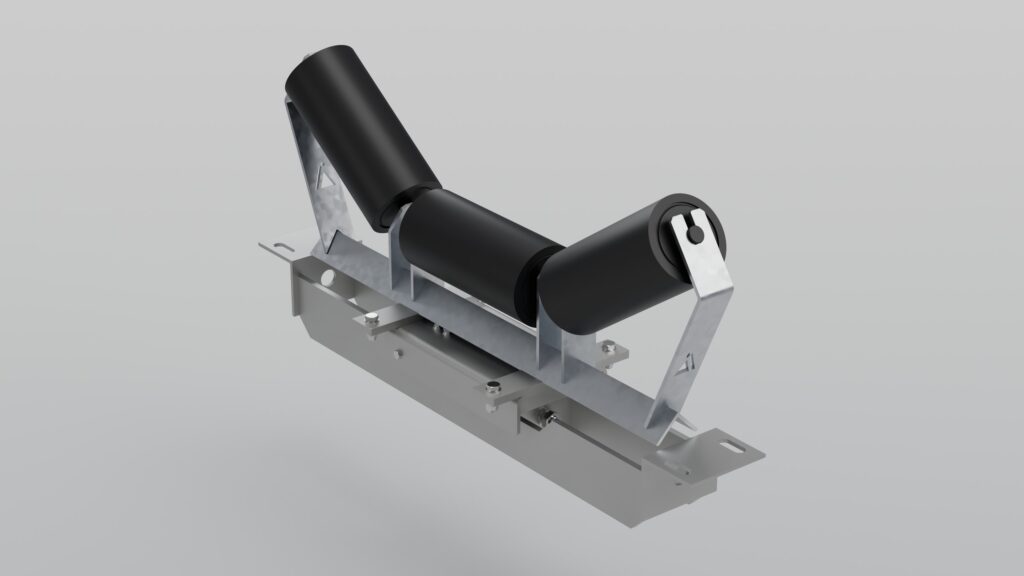
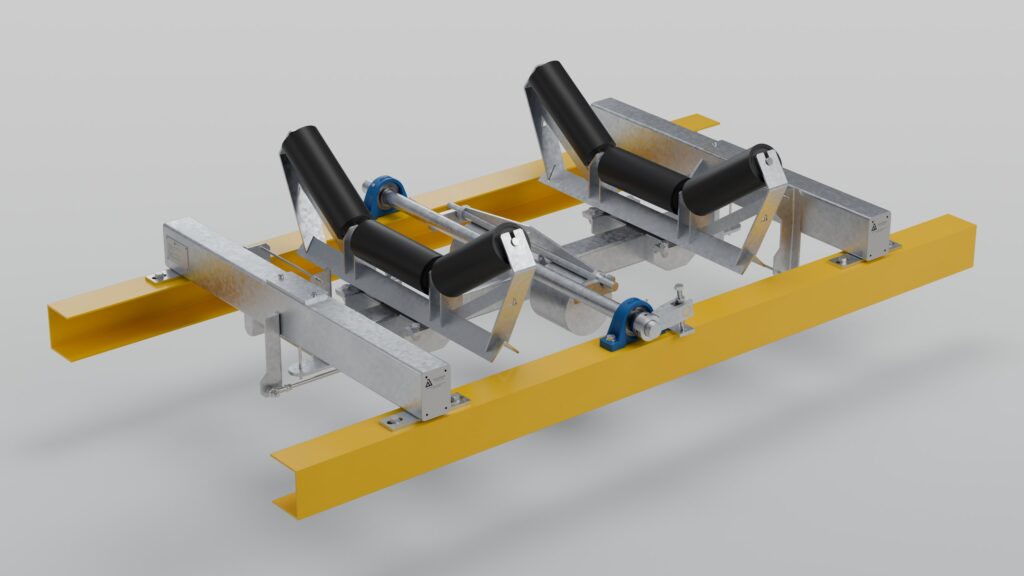
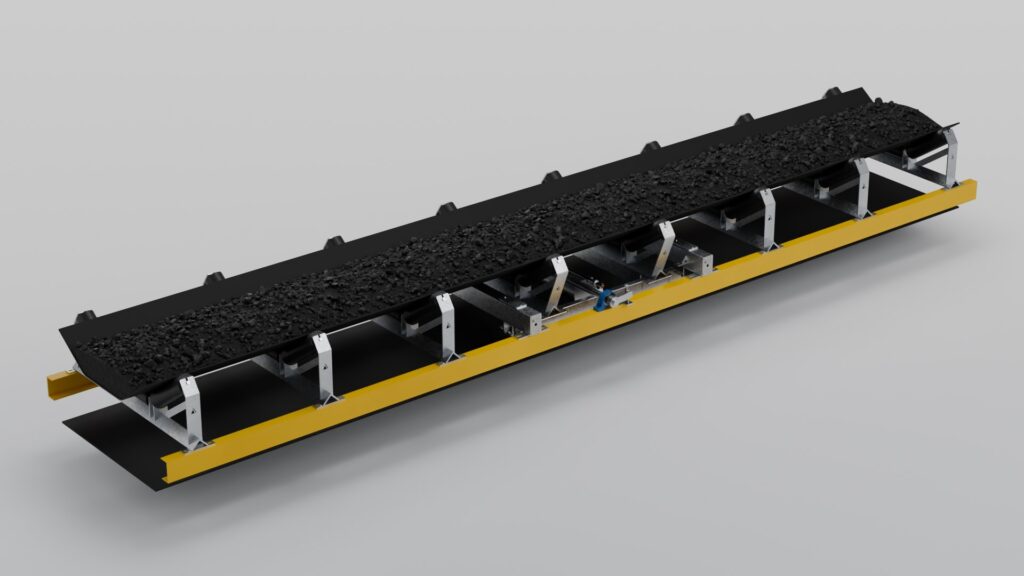
We also supply integrators, speed sensors, load cells and weigh-quality idlers and rollers, and service a range of existing belt weigher makes and models. Send equipment labels, photos and conveyor details so we can confirm the support or replacement options for your installation. Discuss a new system or an upgrade, or enquire about weightometer calibration and servicing.
Frequently asked questions
Does a three-roller troughing idler make it a three-idler scale?
No. The three rollers form one idler set across the belt. Count the weigh idler sets along the conveyor to describe a single-, dual- or multi-idler arrangement.
How many idlers does my belt weigher need?
There is no universal count. A longer weighing section can help in suitable applications, but the complete design, conveyor conditions, operating range and calibration determine the result. Compare the specified performance and its conditions, not just the number of idlers.
Can a belt weigher be fitted to an existing conveyor?
Often, but the conveyor needs a suitable weighing position, adequate structure, clearance and access. A site assessment establishes the mounting work and any changes needed before the equipment is selected.
Can I keep my existing integrator when changing the weigh frame?
Possibly. Load cell and speed sensor compatibility, configuration, capacity and required outputs need checking. Plan recommissioning and calibration of the complete installation; retaining electronics does not make the replacement a direct swap.
Need a manual for your equipment?
Talk to us about manuals for your equipment. Send the make, model, serial number and software version (a photo of the label is fine) and we’ll help you find the right document.