
Choose a belt weigher by starting with what the tonnage figure will be used for, then match the complete system to the conveyor. The purchase price matters, but so do installation work, calibration access, ongoing support and the cost of unreliable tonnes. This guide helps mine, quarry and process-plant teams compare belt weighers, weightometers and conveyor belt scales on a useful basis.
Accurate Industries designs and manufactures weigh frames in Australia and welcomes equipment enquiries from customers worldwide. We assess the conveyor and required performance before recommending a new system, a repair or an upgrade.
How accurate does a belt weigher need to be?
Explain the decision the measurement supports. Production monitoring, blending, stock reconciliation and sale by weight can place different demands on a scale, but there is no universal percentage assigned to each duty. Agree the required performance, operating range, test method and acceptance criteria for the actual installation.
- Production monitoring: consider how the reading will guide operators and whether low-flow operation is important.
- Blending and inventory: consider the effect of measurement error on recipes, stock figures and reconciliation over time.
- Loading and commercial transactions: identify whether the tonnes determine payment and whether trade measurement requirements apply.
Ask what a quoted accuracy figure means: percentage of the material weighed, percentage of full scale, or something else? Check the minimum load, belt-speed range, test quantity and installation conditions attached to the claim. Display resolution is not measurement accuracy.
Do more weigh idlers or load cells guarantee better accuracy?
No. A longer weighing section can help in a suitable application, but idler count alone does not establish performance. Precision single-idler systems also exist. Compare the complete design and its stated conditions; see types of belt weighers for the differences between single-, dual- and multi-idler arrangements.
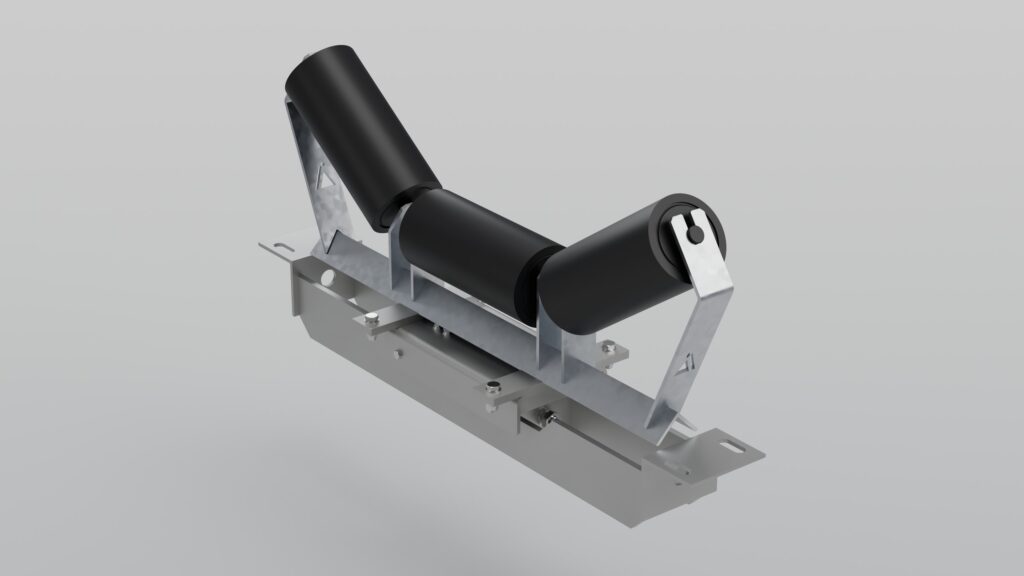
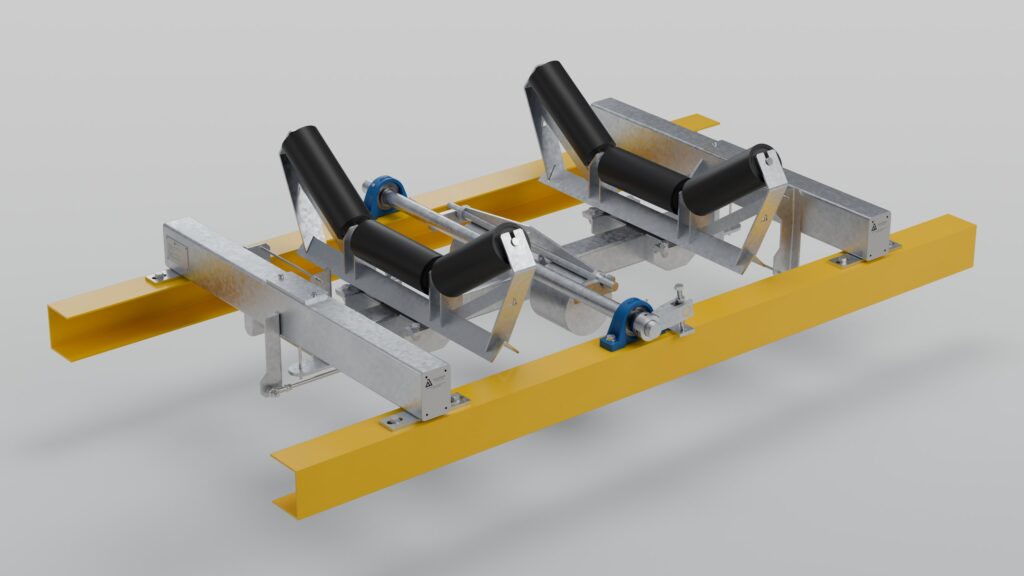
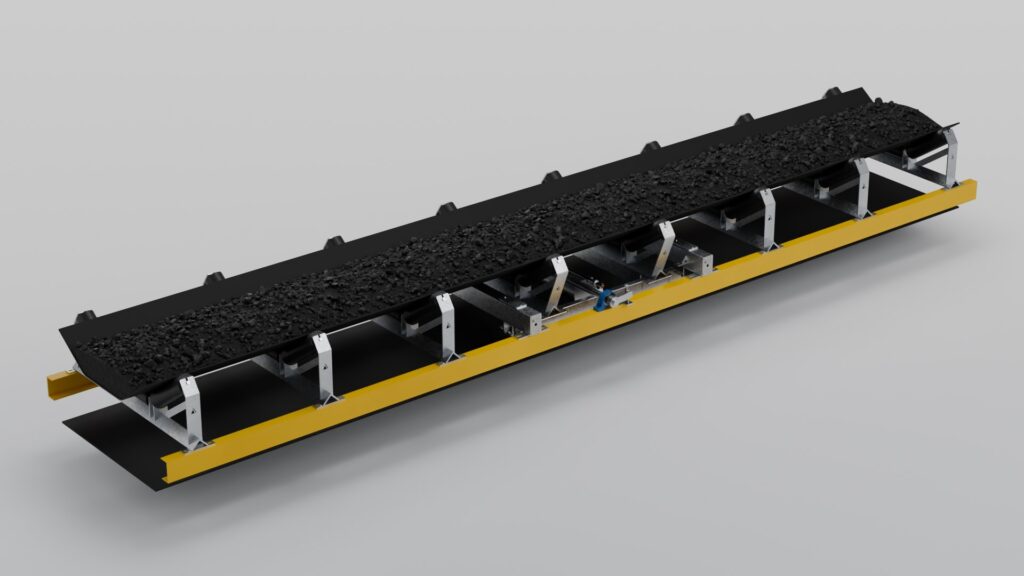
Our range covers three families: Compact (CBW: single weigh idler, one or two load cells, rated to 3.5 m/s), PBW2 (two load cells, one or two weigh idlers, rated to 6.0 m/s) and PBW4 (four load cells, one to four weigh idlers, rated up to 8.0 m/s). We pick the frame around belt speed, the accuracy you need to hold and the belt width. More components cannot make up for an unsuitable weighing location or an unstable conveyor.
What drives the installed cost of a conveyor belt scale?
- Weigh frame and conveyor fit: belt width, idler geometry, available space, structural condition and mounting work.
- Operating environment: suitable materials, finish, enclosure protection and access for cleaning or maintenance. Confirm the required specification rather than assuming a finish suits every site.
- Sensors and integrator: load cell capacity and compatibility, speed measurement, operator display and power requirements.
- Plant connections: cable routes, analogue or pulse outputs, communications hardware, PLC integration and commissioning.
- Calibration arrangements: reference equipment, safe access, weight-handling provisions and material-test requirements.
- Site work: labour, access equipment, shutdown coordination, travel, inductions and project documentation.
Compare quotations on the same scope. A supply-only price cannot be compared directly with a complete installed and commissioned system. Ask what is included, what the site must provide and what could change after inspection.
Can repairing or upgrading be better value than replacement?
Yes. A serviceable frame may only need suitable repairs, new sensors or an integrator upgrade. Conversely, repeated breakdowns, poor access to spares or persistent measurement instability can make continued repairs expensive. Replacing electronics alone will not solve a worn or obstructed weigh frame.
Consider the cost of keeping the existing system as well as the upgrade price. A few hours of avoidable downtime, or months of unreliable production figures, can outweigh an initial saving. The value depends on your plant; an upgrade is worthwhile when it addresses a confirmed limitation and delivers a practical benefit.
For illustration only, a sustained 1% measurement bias over 100,000 tonnes represents a 1,000-tonne reporting discrepancy. It does not automatically mean 1,000 tonnes of product have been lost, but it can affect stock decisions, blending or reconciliation. Use your throughput, downtime costs and confirmed error when comparing options.
Accurate Industries will assess the current condition, repair where practical and recommend an upgrade where it offers better value. See repair, upgrade or replace an existing belt weigher.
Which calibration arrangements should be included?
Plan how the scale will be checked before ordering it. Suitable test weights or store-in-place weights can provide a repeatable reference. A lifting arrangement may reduce manual handling where its design and site procedures permit. A roller test chain needs suitable coverage, restraint, handling and storage. A controlled material test checks the system with conveyed material against an appropriate reference.
These methods test different aspects of performance. Select them for the actual weigh frame and duty, and record any relationship established between a routine reference and a material test. Our guide to belt weigher calibration methods explains the distinctions. Tell us if calibration-chain hire would help; suitability and availability need confirmation.
What changes if the scale will be used for trade?
Raise trade use before equipment selection. In Australia, applicable pattern approval, verification and permitted error requirements must be met. A catalogue accuracy figure or a routine service report is not enough on its own. See National Measurement Institute guidance. For overseas supply, identify the destination’s requirements at the quotation stage.
What information helps us prepare a useful quote?
- Site or delivery location, material and the purpose of the measurement.
- Minimum, normal and maximum throughput, belt width and belt speed or speed range.
- Conveyor incline, idler spacing and geometry, available weigh-section space and photos.
- Existing frame, load cell, speed sensor and integrator models if upgrading.
- Power supply, required plant outputs or communications protocol, and enclosure requirements.
- Available shutdown, access constraints and preferred calibration method.
Send what you have; you do not need every measurement before starting the conversation. Discuss a belt weigher quote or email conveyor photos and equipment details. For an existing installation, ask about weightometer calibration and belt weigher servicing.
Frequently asked questions
Should I buy the cheapest belt weigher?
A lower purchase price can be good value if the system suits the conveyor and has appropriate support. Compare the full installed cost, performance requirements and future maintenance needs.
Does a more expensive scale need less calibration?
Price does not determine the service interval. Set checks around the manufacturer’s instructions, duty, site conditions, performance history and consequences of error.
Can you supply outside Australia?
Yes. We welcome equipment enquiries worldwide. Our own weigh frames are designed and manufactured in Australia; integrators and other sourced components have their respective manufacturers and origins. Confirm the supplied scope, freight and destination requirements with us.
Need a manual for your equipment?
Talk to us about manuals for your equipment. Send the make, model, serial number and software version (a photo of the label is fine) and we’ll help you find the right document.