
Accurate Industries services, calibrates, supplies and commissions EMC ModWeigh belt weigher integrators across Australia. As an EMC agent, we support MP1 and MP2 processors and compatible ModWeigh modules, together with the weigh frame, load cells and speed sensor. Whether you call it an EMC weigher, weightometer or conveyor belt scale, we help identify the equipment and investigate the whole installation.
Discuss an EMC service or calibration · View MP1 and MP2 specifications · 1300 101 666
Do you service EMC belt weigher integrators?
Yes. Scheduled calibrations, breakdown support, mechanical repairs, sensor replacements, communications setup and commissioning are all part of our work. We inspect the electronics and the physical scale together, rather than assuming an inaccurate total means the integrator has failed.
Routine maintenance calibration supports production monitoring and stock reconciliation. If the belt weigher is used for trade, tell us when enquiring so we can confirm the separate requirements and service scope.
MP1 vs MP2: what is the practical difference?
The MP1 and MP2 are different formats within the ModWeigh family. The model number alone is not a reason to replace a working unit. Both are panel-mounted processors, but their display, keypad, connections and available input/output arrangements differ.
- MP1: larger operator display; additional field I/O can be provided through the MR1 module.
- MP2: compact format with built-in field I/O and an MO3 expansion option.
- Separate modules: an MD display with an MT transmitter is another system arrangement. It is not the same as assuming every MP1 or MP2 has a separate transmitter.
When selecting or replacing equipment, we check the actual hardware, software and required signals. A display-size comparison alone is not enough. See the EMC integrator specifications and MP1/MP2 comparison for the detailed differences.
Identify your EMC MP1 or MP2
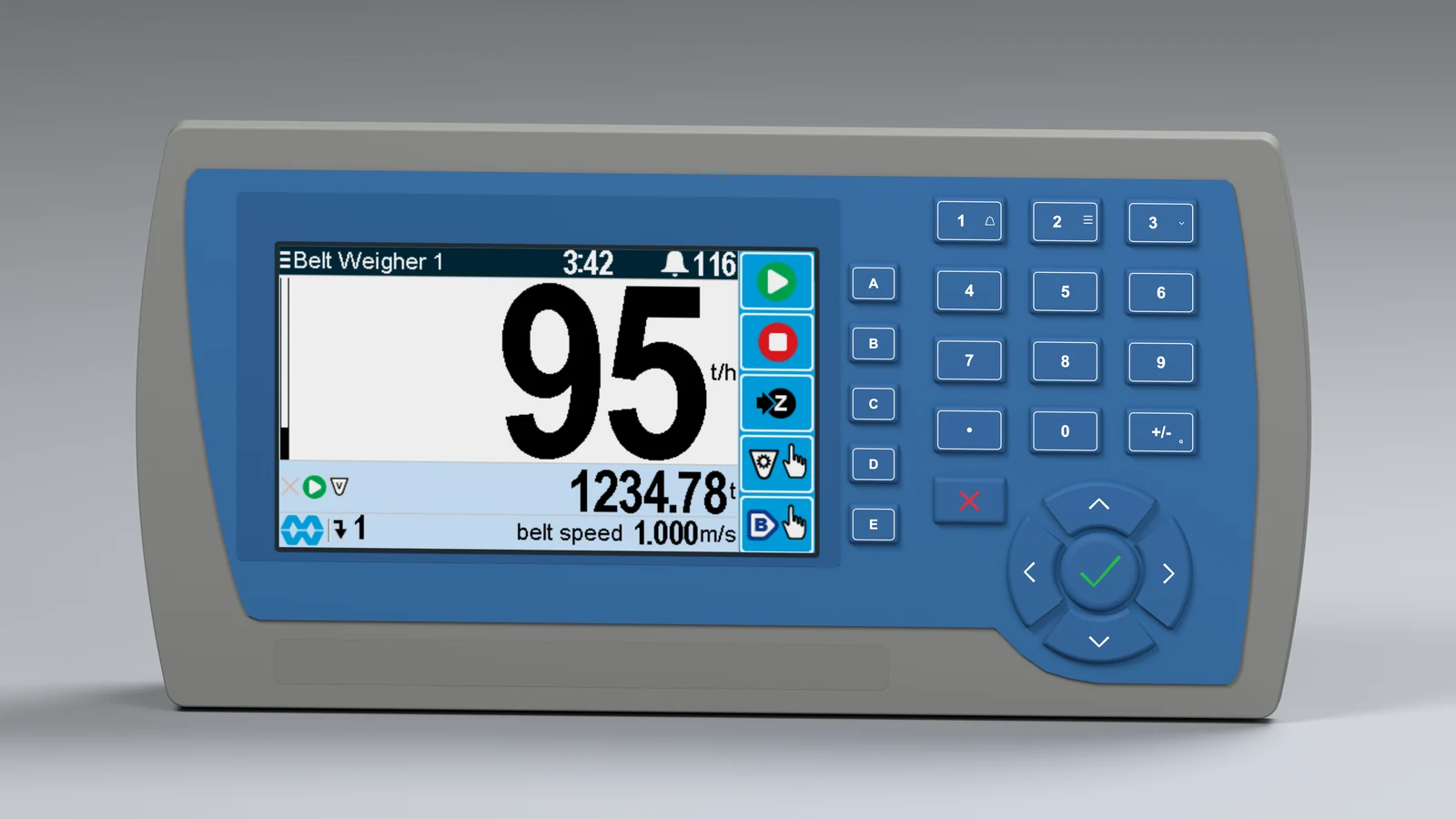
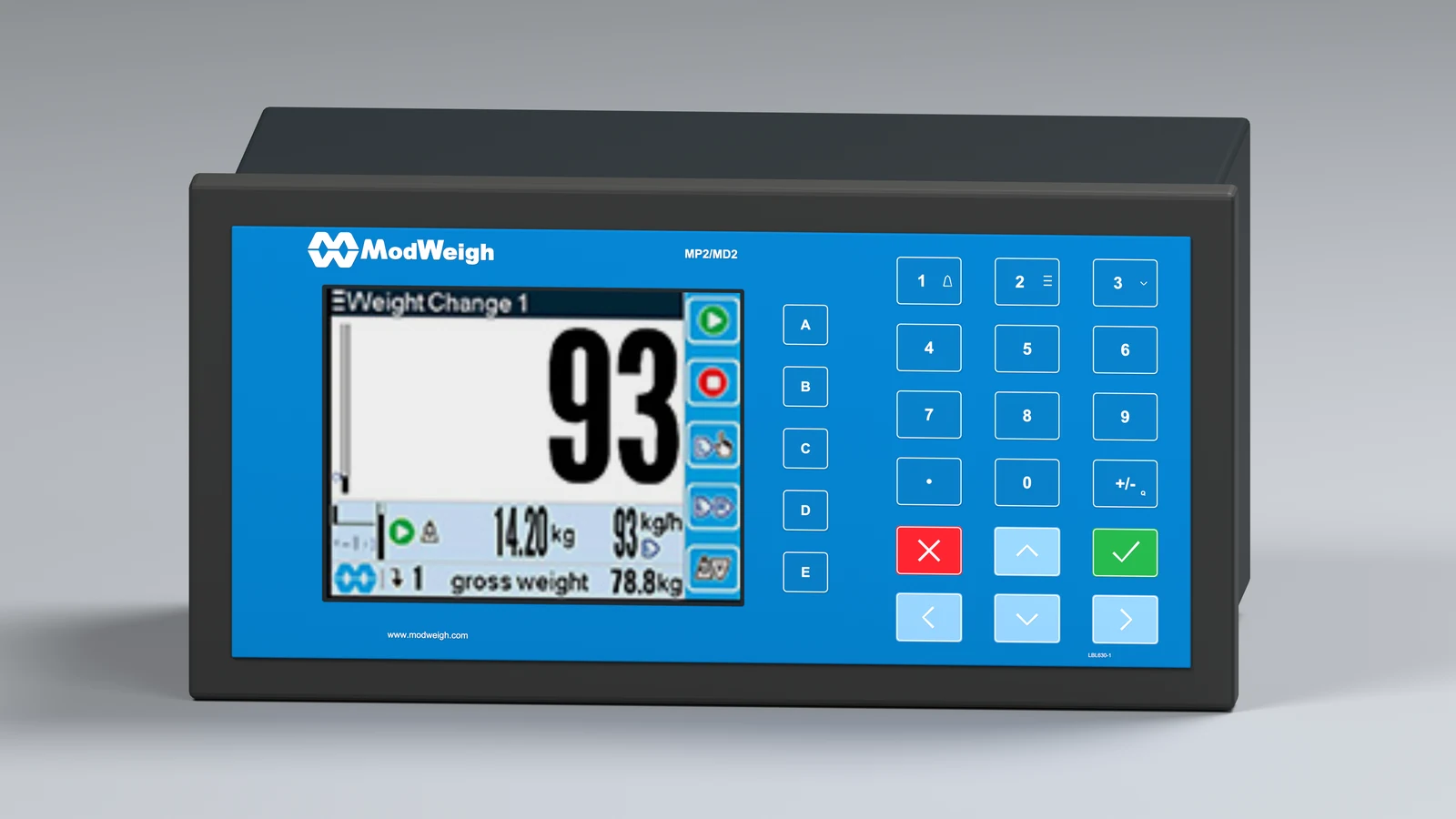
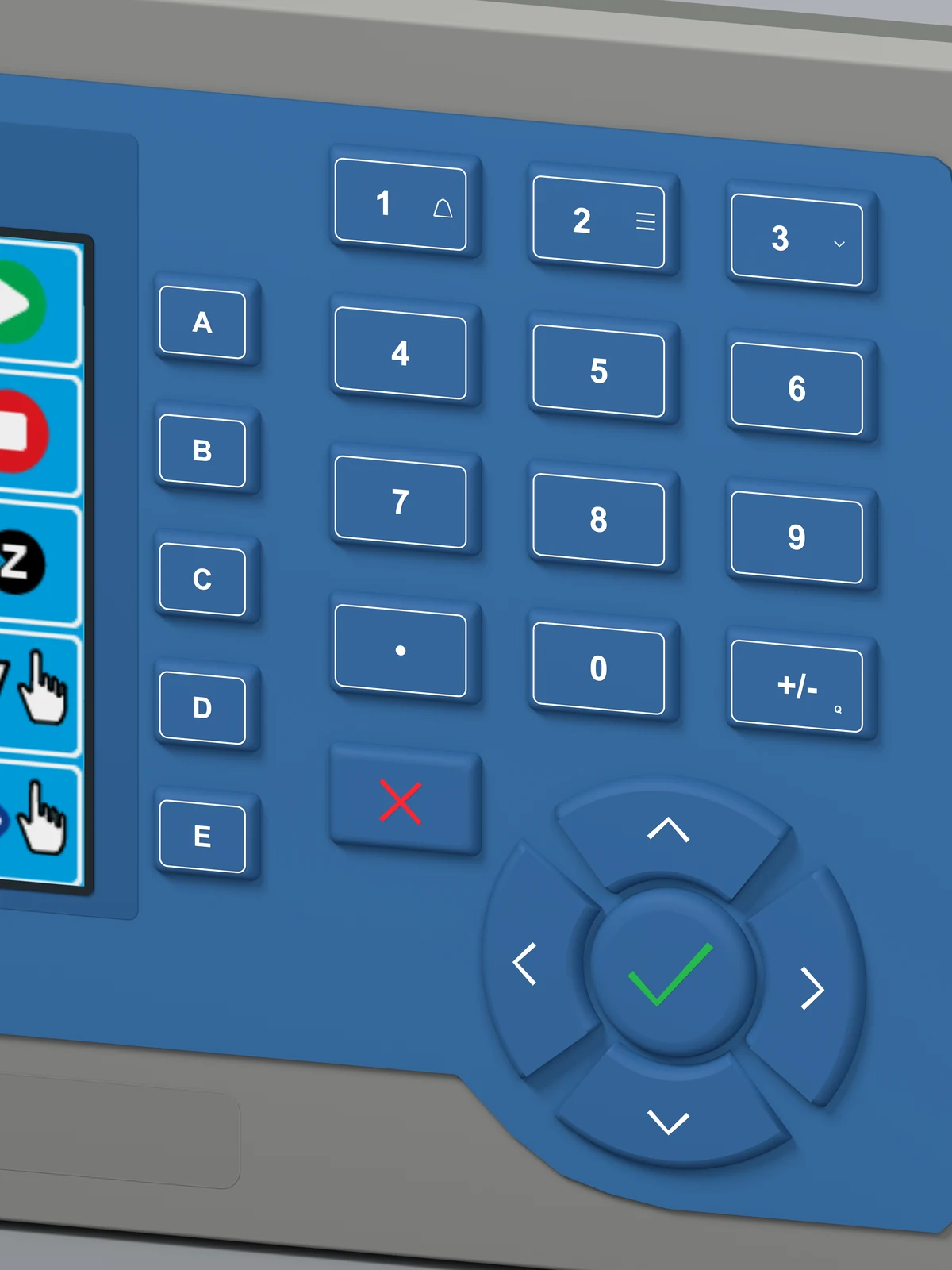
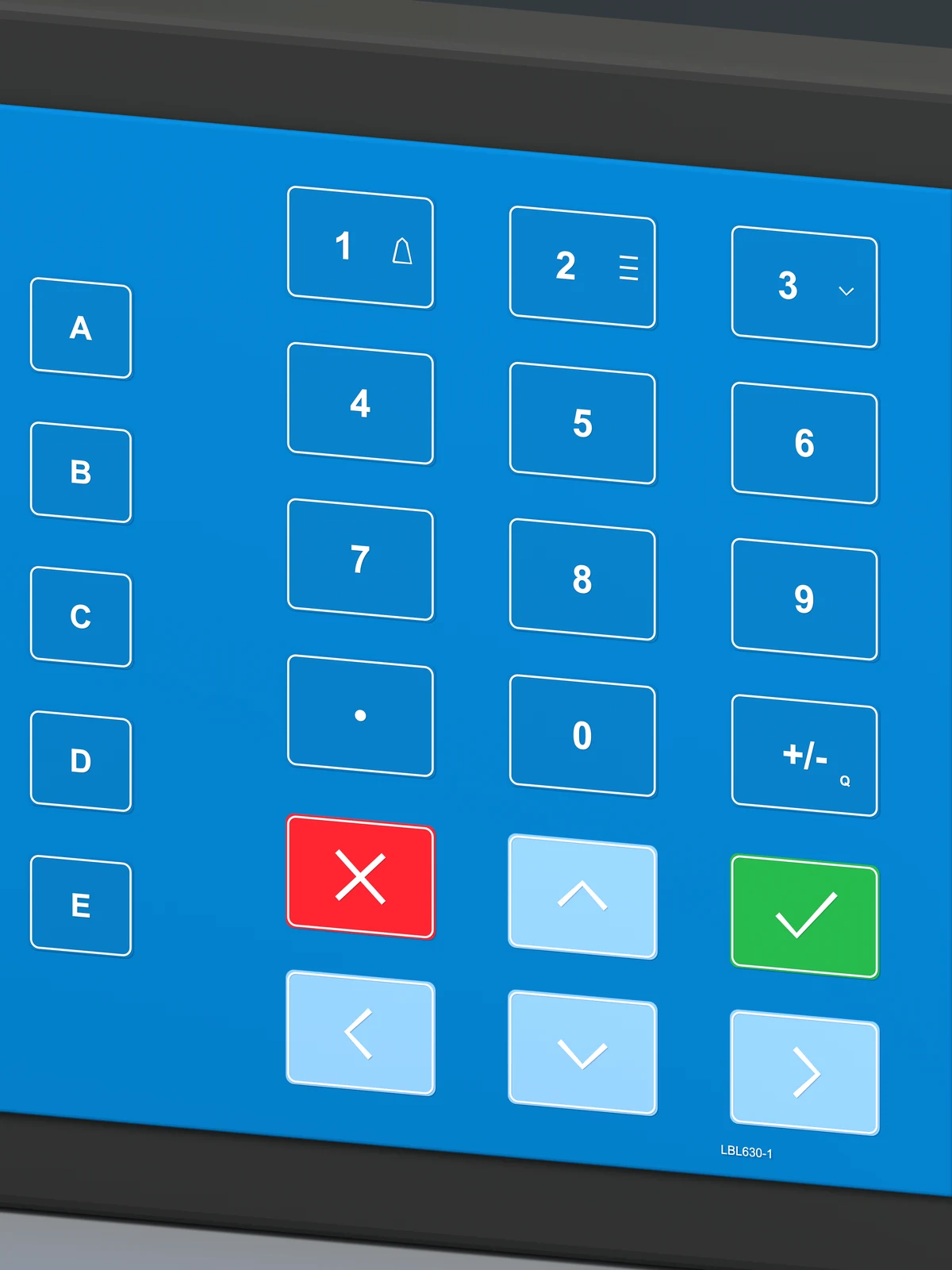
Use these exterior views to recognise the front panel, then check your unit’s model label and software version. The render displays are illustrative and do not show live readings or a calibration procedure.
EMC ModWeigh MP1 exterior tour
EMC ModWeigh MP2 exterior tour
Do you hold the EMC documentation?
Yes. We hold EMC ModWeigh documentation and our own wiring diagrams and field references. Send the processor or transmitter model and software version so we can identify the applicable instructions. The MW95 belt weigher and MW96 weighfeeder applications have different duties; their names do not simply indicate older and newer generations.
For equipment we service, we record the model, serial number, configuration and calibration results. Those records help with future troubleshooting and replacement assessment, but any settings restored to replacement hardware still need checking and commissioning.
What does an EMC belt weigher calibration involve?
We first inspect the installation and confirm the stored setup against the equipment. The appropriate procedure depends on the weigh frame, application software and available reference equipment.
- Mechanical and signal checks. Inspect the weigh area, idlers, free movement, load cell connections and speed measurement.
- Zero checks. Check the empty belt under the specified running conditions and confirm the result repeats.
- Span and reference checks. Use the applicable test-weight, chain or other calibration method. A material comparison can assess the installed system against a separately established mass.
- Records. Record as-found and as-left values, test results and any remaining work.
Records are kept in AIMM, our asset management system, with the next service due date, at no extra cost. Read what happens during a calibration visit for the broader process.
Keeping it accurate between service visits
Most of the drift we find on site starts small, so a bit of routine goes a long way.
- Run a zero about every two weeks Run it again after a big change in the weather, with the belt running empty.
- Check the span, but don’t accept it. A span check is a good health check. Leave span adjustments to the service visit so a bad test doesn’t get locked in.
- Book a service calibration every quarter. We adjust zero and span at each visit, and quarterly visits keep up with the changing seasons.
- Keep the weigh area clean. Build-up on the weigh idlers, or anything rubbing the frame, shows up as zero drift straight away.
- Keep the idlers aligned. We set the weigh area idlers with two string lines over each roll, to about 0.3 mm, all at the same height and usually slightly above the idlers either side. If an idler in the weigh area gets replaced, have the alignment checked.
On our service visits, a routine span result inside 0.25% is accepted. Outside that, we find out why before we adjust anything. A healthy scale repeats its span check within 0.1%.
What goes wrong on EMC scales?
A symptom can have several causes. We use the alarm details, installation history and measurements to narrow down the fault.
- No speed or incorrect speed: sensor supply, signal compatibility, wiring, alignment, mechanical drive or speed scaling.
- Unstable weight or drifting zero: build-up, binding components, belt behaviour, vibration, load cell problems or moisture in connections.
- Totals that disagree with a reference: zero and span performance, speed measurement, low-flow cutout, operating conditions or the comparison method.
- Correct local reading but incorrect control-room data: output selection and scaling, pulse settings, wiring or communications configuration.
See common belt weigher faults and our speed sensor guide. Record the exact alarm message before clearing it. Follow site isolation procedures before inspecting wiring or accessing the conveyor.
Wiring tips from our technicians
- Speed input: aim for about 2,000 pulses per minute at normal belt speed.
- Load cell cable: if the load cells aren’t wired into a junction box close by, run sense cable so the integrator can allow for the cable run.
- Access codes: most integrators we see have no password set. If your site sets custom access codes, we can keep them on record for you in AIMM, our asset management system, at no extra cost.
Can you supply a new or replacement EMC integrator?
Yes. We assess the existing weigh frame, sensors, software and control-system connections before recommending an MP1, MP2 or modular configuration. Supply, installation, commissioning and calibration are arranged to the agreed scope. Retaining compatible equipment can be practical, but copying old settings alone does not prove a replacement is reading correctly.
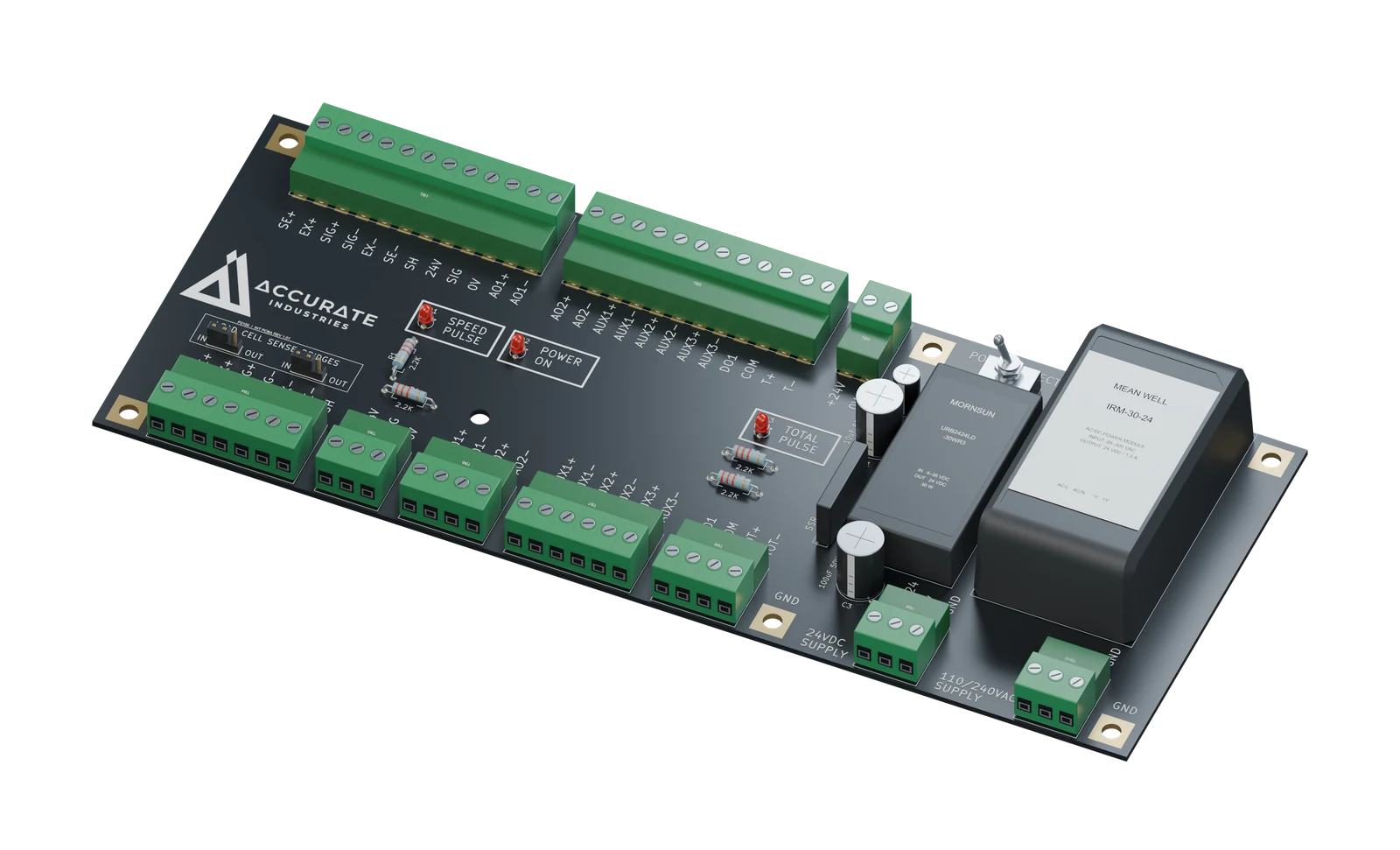
When we supply a complete integrator kit in an enclosure, it includes our integrator interface PCB. For organised four-channel wiring and individual channel switching, see our load cell switching PCB; suitability is checked for the installation.
Supplied stand-alone or built into an enclosure
Every installation is different, so we work out how the MP1 or MP2 is mounted with you before we quote. We supply it three ways:
- Stand-alone Ready to fit into your existing panel or switchroom.
- Built into our 316 stainless steel enclosure 400 × 400 × 250 mm, with a viewing window. Ready to mount out near the scale.
- Built into another enclosure to suit the site For installations where it needs to match an existing panel, fit a tight spot or leave room for extra communications gear.
When we supply a complete kit in an enclosure, our integrator interface PCB is included, so the field wiring lands on clearly labelled terminals. Tell us where the integrator will live, how far it is from the weigh frame, and what power and communications you have, and we’ll recommend the setup that suits.
What should you send with an EMC enquiry?
- Site location, contact details and the work you need.
- Photos of the unit front and accessible identification labels.
- Processor, display, transmitter and I/O module models where known.
- Software version, exact alarm text and recent component changes.
- Saved settings, service reports or reference weights if relevant.
Attach photos to an email to admin@accurateindustries.com.au. Send whatever information you have; we can help identify what is missing. For an enquiry without attachments, use our contact form.
Frequently asked questions
My EMC label or manual says MW95A or MK95A. Which integrator do I have?
Those belt weighing designations do not identify all the fitted hardware. Send the exact label, software version and processor, transmitter or display model where available. See our MW95A/MK95A identification guide so we can match the documentation and assess service or replacement options.
Do you work on the weigh frame and sensors as well as the EMC integrator?
Yes. We service the complete belt weigher: weigh frame and carriage, load cells, speed sensor, ModWeigh electronics and the wiring between them.
Does an MP1 need replacing because an MP2 is available?
No. We assess condition, performance and site requirements. The models differ in more than screen size, so a replacement must be checked for the required connections and functions.
Can you help me find an EMC ModWeigh manual?
Yes. Talk to us about manuals for your equipment. Send the model, serial number and software version, if available, so we can match the documentation to your hardware and software. Email us or contact the team.
Do you supply EMC integrators and parts?
Yes. We help identify and supply EMC equipment and suitable belt weigher replacement parts. Compatibility and availability are confirmed for the required item.
Can an EMC integrator connect to our PLC or SCADA?
Yes. Modbus RTU over RS232/RS485 is available on the MP1 and MP2. Analogue, pulse and digital signals depend on the processor and fitted I/O. For an Ethernet network, tell us the required protocol so we can confirm a suitable interface arrangement.
Can you supply an MP1 or MP2 already built into an enclosure?
Yes. We supply it stand-alone, built into our 316 stainless enclosure, or in another enclosure to suit the site. Every installation is different, so we work it out with you first.
How often should site staff run a zero?
About every two weeks, and after a big change in the weather. Run it with the belt running empty.
Should site staff accept a new span?
No. Check the span, but leave span adjustments to our service visit, so a bad test doesn’t get locked in.
Related guides
- EMC system component guide
- EMC faults and calibration
- Belt weigher zero drift
- Belt weigher calibration tolerance
Need EMC weightometer service, calibration or replacement advice?
Discuss your EMC system, call 1300 101 666 or email admin@accurateindustries.com.au.
Technical reference: EMC MW95A technical information, SV6.09f. Confirm the document and settings for the fitted equipment.